-1.jpg)
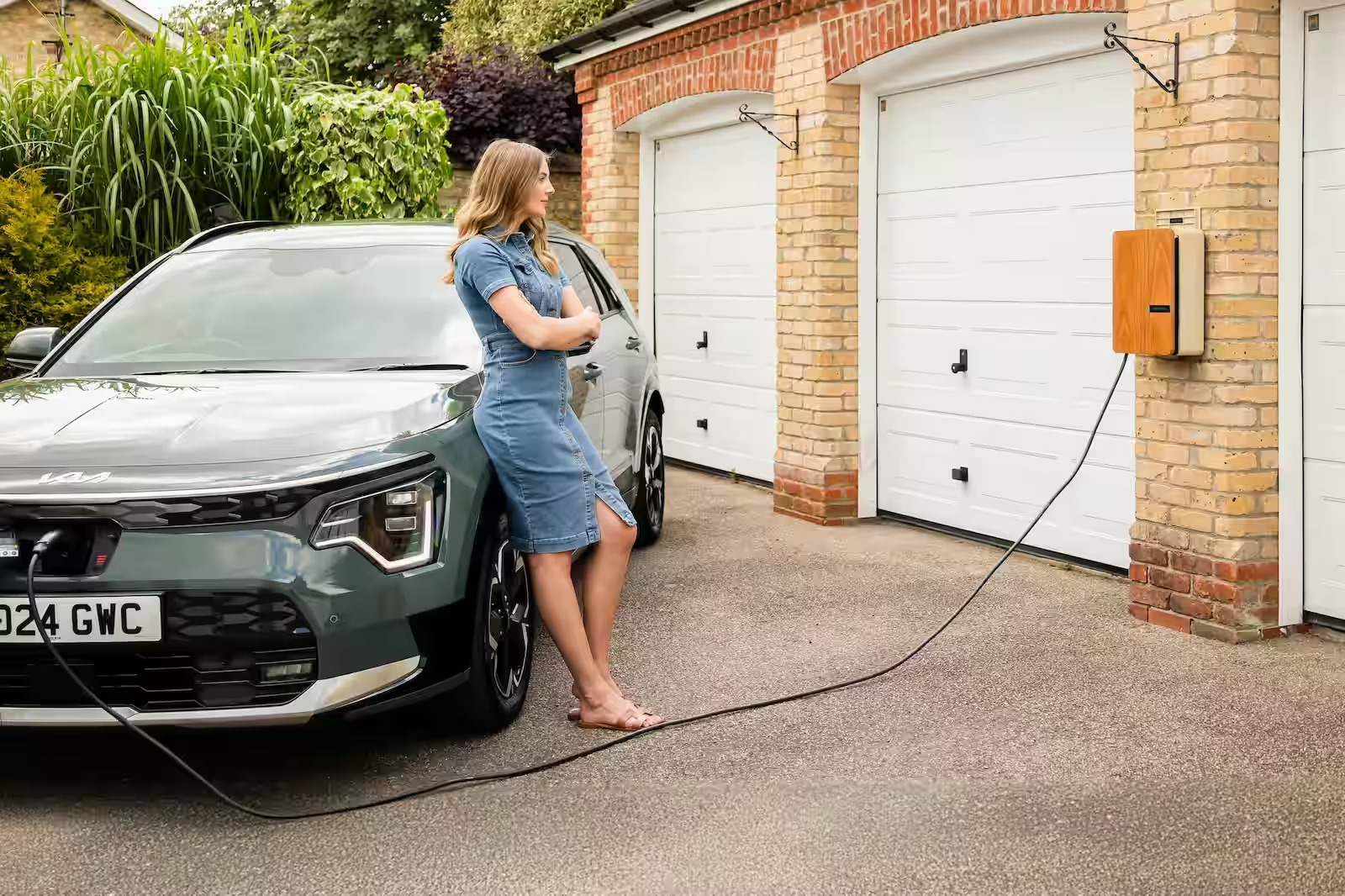
Electric vehicles are rapidly becoming the norm across New York, and homeowners throughout the Hudson Valley are looking for reliable, fast charging at home. If you've recently purchased an EV or are planning to, installing a Level 2 home charger is one of the best investments you can make.
At All American Electrical Service, we've been installing EV chargers for homeowners across Rockland, Orange, Westchester, Sullivan, Ulster, and Putnam counties since the technology first became mainstream. This guide covers everything you need to know about home EV charging, from electrical requirements to permits and available rebates.
Every EV comes with a Level 1 charger that plugs into a standard 120-volt household outlet. While this works in a pinch, it's painfully slow, adding only about 3 to 5 miles of range per hour of charging.
A Level 2 charger uses a dedicated 240-volt circuit (similar to what powers your dryer or oven) and charges dramatically faster:
For most homeowners, a Level 2 charger means plugging in when you get home and waking up to a full battery every morning. No more trips to public charging stations or range anxiety.
Installing a Level 2 EV charger isn't as simple as plugging into an existing outlet. Here's what's typically needed:
Most Level 2 chargers require a dedicated 40-amp or 50-amp circuit on a 240-volt line. This circuit should serve only the charger and nothing else.
Your electrical panel needs enough available amperage to support the new circuit. Many older homes in Stony Point, Haverstraw, New City, and Nanuet have 100-amp panels that may already be near capacity.
If your panel can't support the additional load, a panel upgrade may be necessary before the charger can be installed.
The wire running from your panel to the charger location must be sized correctly for the amperage and distance. Longer runs require heavier gauge wire to prevent voltage drop.
Current electrical codes require ground-fault circuit interrupter (GFCI) protection for EV charging circuits. This adds a layer of safety against electrical shock.
Most homeowners install their EV charger in the garage, but that's not the only option:
The best location depends on where you park, how far it is from your electrical panel, and whether indoor or outdoor installation makes more sense. We assess all of this during the initial estimate.
Here's what a typical home EV charger installation looks like when you work with us:
Most installations are completed in half a day to a full day, depending on the complexity of the wiring run and whether panel work is required.
Not always, but it's common. Here's how to think about it:
We always perform a load calculation before recommending any panel work. We'll never suggest an upgrade you don't actually need.
EV charger installations in New York require an electrical permit in most municipalities across our service area. The permit ensures:
We handle all permitting and coordinate the inspection as part of every EV charger installation.
New York offers several programs that can reduce the cost of home EV charger installation:
We recommend checking current availability at the time of installation, as programs and amounts change. We're happy to point you in the right direction during your estimate.
Level 2 chargers come in two configurations:
Both options work well. We install both types and can help you decide which makes more sense based on your situation and local code requirements.
How much does it cost to install an EV charger at home?
Costs vary based on panel capacity, wiring distance, and whether a panel upgrade is needed. We provide free estimates so you know exactly what to expect.
Can I install an EV charger in my older home?
Yes, but older homes may need a panel upgrade first. Many homes in Rockland and Orange counties have 100-amp panels that need to be upgraded to safely support a Level 2 charger.
How long does installation take?
Most installations are completed in one day. If a panel upgrade is involved, it may take a second day.
Do I need a permit for an EV charger in Rockland County?
Yes. An electrical permit is required, and we handle the entire process for you.
Can I charge my EV in the rain with an outdoor charger?
Yes. Outdoor-rated Level 2 chargers are designed to operate safely in all weather conditions, including rain and snow.
A home Level 2 charger is the most convenient and cost-effective way to keep your electric vehicle charged. At All American Electrical Service, we handle everything from the load calculation and panel assessment to permitting, installation, and final inspection.
We serve homeowners across Rockland, Orange, Westchester, Sullivan, Ulster, and Putnam counties with clean, code-compliant electrical work backed by over 20 years of experience.
📞 Call (845) 786 3143 or request a free estimate to get your home EV charger installed by a licensed New York electrician.
8 Phelps Street, West Haverstraw, NY 10993, USA
Mon–Sat: 7:00 AM – 3:30 PM
Sun: Closed
⭐ Rated 5.0 on Google Reviews


Book now and we'll put you at the front of the line — priority same-week scheduling across Rockland & the Hudson Valley.
Licensed. Insured. 20+ years. 5-star rated. No call-out fee for your estimate.
Call Us Now(845) 786-3143