-1.jpg)
A three-day outage costs a Hudson Valley household more than most people expect. A freezer full of food, a sump pump that stops while the water table is rising, a boiler that will not fire, and a well pump that leaves you without running water. The generator question is not really about generators — it is about which of those things you are willing to lose, and for how long.
There are two honest answers, and they suit very different households. A portable generator is cheap, manual and limited. A standby generator is expensive, automatic and complete. Below is what each one actually does in a Rockland County home, what it costs to run, and how to tell which one fits your situation.
A portable generator is a petrol-powered engine on wheels. When the power fails you roll it outside, fill the tank, pull the cord or hit the electric start, and run extension cords back into the house. Most residential units land somewhere between 3,000 and 8,500 running watts.
That wattage sounds generous until you price out what you actually want running. A refrigerator needs roughly 700 running watts but two to three times that for the few seconds its compressor starts. A 1/2 HP sump pump behaves the same way. A window air conditioner, a few lights, a modem and a phone charger will consume most of what is left. A 5,000-watt portable will comfortably run a fridge, a sump pump and some lighting — not a furnace, a well pump and a water heater at the same time.
The running cost is worth understanding before you buy. A mid-size portable burns roughly half a gallon of petrol per hour under moderate load. Over a 24-hour outage that is around 12 gallons, and it does not feed itself — someone has to refill it every few hours, including overnight, including in the weather that caused the outage.
Portable generators produce carbon monoxide at levels that can kill in minutes in an enclosed space. Running one in a garage, on a covered porch, in a breezeway or under a deck is genuinely dangerous, even with the door open. The rule is at least twenty feet from the house, exhaust pointed away, never under an overhang. Every winter storm season produces news stories that begin with someone deciding the rain made the garage a reasonable compromise.
Every home with a portable generator should also have working carbon monoxide alarms on each level. New York requires CO alarms in most residences already; a generator makes them non-negotiable rather than a formality.
The most dangerous thing a homeowner can do with a portable generator is make a “suicide cord” — a double-male extension lead plugged into the generator at one end and a wall outlet at the other. It energises your home’s wiring and, through the meter, the utility lines outside. Line workers have been killed by exactly this. It is illegal in New York, it will void your insurance, and it is entirely avoidable.
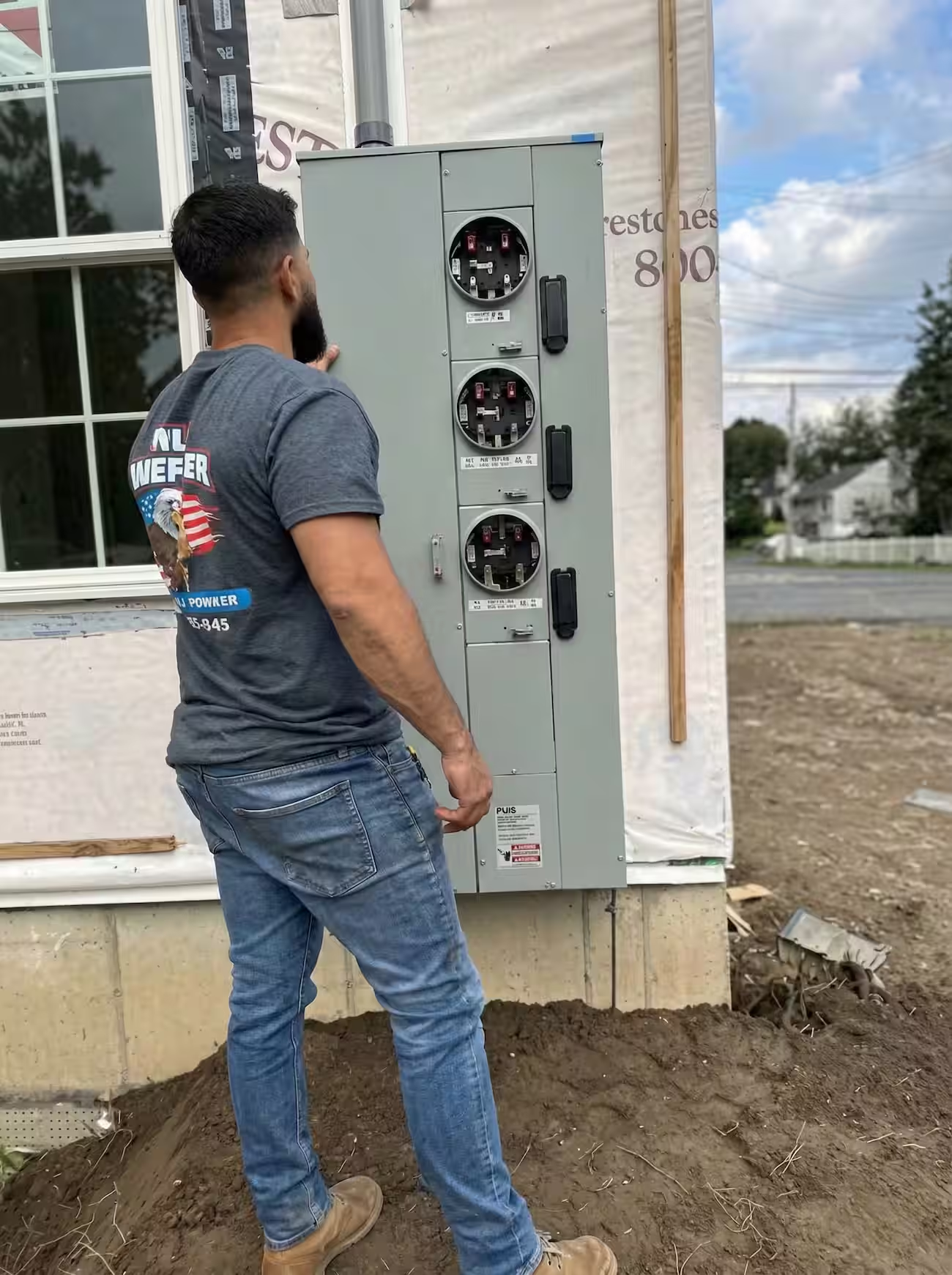
The correct answer is a manual transfer switch, installed by a licensed electrician beside your panel. It isolates your home from the grid and lets a portable safely power a chosen set of hard-wired circuits — furnace, sump pump, well pump, refrigerator, a few lighting circuits — with no extension cords running through a window. Installed, a transfer switch and inlet box typically runs a few hundred to around fifteen hundred dollars depending on the panel and the run. It is the single best upgrade you can make to a portable setup.
A standby generator is a permanently installed unit that sits outside on a pad, wired directly into your electrical system through an automatic transfer switch. It runs on natural gas or propane, so there is no fuel to store and nothing to refill. When it senses the utility drop, it starts itself, transfers the load, and powers the house — typically within ten to thirty seconds. When the grid returns, it transfers back and shuts down.
Residential units generally run from around 10 kW to 26 kW. The size you need is not a guess; it comes from a load calculation on your actual home. A 2,000-square-foot house with gas heat and no well often lands comfortably in the 14 to 18 kW range. Add a well pump, electric heat, a hot tub or a large air-conditioning system and the number climbs.
Fully installed, most Hudson Valley standby generator projects land in the range covered in our 2026 whole-house generator cost guide. That figure includes the unit, the pad, the automatic transfer switch, the electrical work, the gas connection, permits and inspection — not just the equipment price you see advertised.
A standby generator exercises itself weekly for a few minutes to keep the engine healthy. It needs an annual service — oil, filters, plugs, battery check — much like a lawn tractor. The battery is the most common failure point and the reason a generator that has not been maintained fails on the night it is finally needed. Budget for a yearly service visit and you will get twenty years out of a good unit.
Fuel cost depends on load and fuel type. Running on natural gas, a mid-size standby unit under a typical household load costs meaningfully less per hour than petrol in a portable, and the supply never runs out. On propane, you are limited by tank size, which is worth sizing deliberately if you are on a 100-gallon tank rather than a 500-gallon one.
A portable generator is the right answer if outages at your address are short and infrequent, someone is reliably home to run it, you have safe outdoor space well away from windows, and your must-run list is short — fridge, a few lights, maybe the furnace through a transfer switch.
A standby generator is the right answer if any of the following is true. You have a sump pump and a basement you cannot afford to flood. You are on a well, so no power means no water at all. Someone in the house depends on powered medical equipment. You work away from home or travel. Or you have simply been through enough multi-day outages in New City, Haverstraw, Stony Point or Nyack to know how this goes every storm season.
There is also a middle path that homeowners often overlook: keep the portable you already own and have a manual transfer switch installed. You get safe, cord-free power to the circuits that matter for a fraction of a standby installation, and you can upgrade later without wasting the work.
Standby generator work is permitted work. In most Rockland County municipalities the job requires an electrical permit and an inspection, and where a gas line is involved a plumbing permit as well. Placement matters too — units have manufacturer clearance requirements from windows, doors and combustible surfaces, and local setback rules can affect where the pad can sit.
We handle that end of it as part of the job: the load calculation that sizes the unit correctly, the permit paperwork, coordination with the gas supplier, the transfer switch, and the final inspection. Our guide to electrical permit requirements in Rockland County covers what to expect if you want the detail before you commit.
Phil Garabo has been doing this work in the Hudson Valley for more than twenty years, and All American Electrical Services is licensed across Rockland, Orange, Westchester, Sullivan, Ulster and Putnam Counties. Every installation is sized to the house rather than to a catalogue, permitted properly, and inspected. If your existing panel is not up to carrying the load, we will tell you before the generator is ordered rather than after — see our guide to panel upgrade costs in Rockland County for what that involves.
The honest recommendation depends on your panel, your fuel supply, your outage history and what you actually need running. That takes a look at the house, not a phone quote. We provide a free on-site estimate across Rockland County and the wider Hudson Valley, and we will tell you if a portable and a transfer switch is the sensible answer — that happens more often than you might expect from a company that sells standby generators.
Call (845) 786-3143 or request a free estimate. We will look at your load, your fuel options and your budget, and recommend the right fit with no upselling.
Not realistically. Most residential portables produce 3,000 to 8,500 running watts, which covers a refrigerator, a sump pump and some lighting but not central air, electric heat or a well pump running together. Whole-home coverage needs a properly sized standby unit with an automatic transfer switch.
It comes from a load calculation on your specific home, not from square footage alone. A 2,000-square-foot Rockland County house with gas heat often lands in the 14 to 18 kW range, while a home with a well pump, electric heat or a large air-conditioning system needs more. Oversizing wastes money; undersizing means the unit trips off when the load spikes.
No. Connecting a generator to your home’s wiring requires a transfer switch installed by a licensed electrician, and it requires a permit in New York. Plugging a generator into a wall outlet to backfeed the house can energise the utility lines outside and has killed line workers. It also voids most homeowner insurance policies.
On natural gas, indefinitely — the fuel supply is the utility’s, so the practical limit is the service interval rather than the tank. On propane, run time depends on tank size and load; a 500-gallon tank at typical household load will generally carry a home through a multi-day outage, while a 100-gallon tank will not.
Buyers in areas with a history of multi-day outages treat it as a genuine feature, particularly on homes with wells or finished basements. It is a permanent, transferable improvement, unlike a portable unit which leaves with the owner.
Usually yes. It removes the extension cords, removes the backfeeding risk entirely, and lets the portable power hard-wired circuits like the furnace and sump pump that cords cannot reach. It is the highest-value upgrade available to anyone who already owns a portable generator.
8 Phelps Street, West Haverstraw, NY 10993, USA
Mon–Sat: 7:00 AM – 3:30 PM
Sun: Closed
⭐ Rated 5.0 on Google Reviews


Book now and we'll put you at the front of the line — priority same-week scheduling across Rockland & the Hudson Valley.
Licensed. Insured. 20+ years. 5-star rated. No call-out fee for your estimate.
Call Us Now(845) 786-3143