-1.jpg)
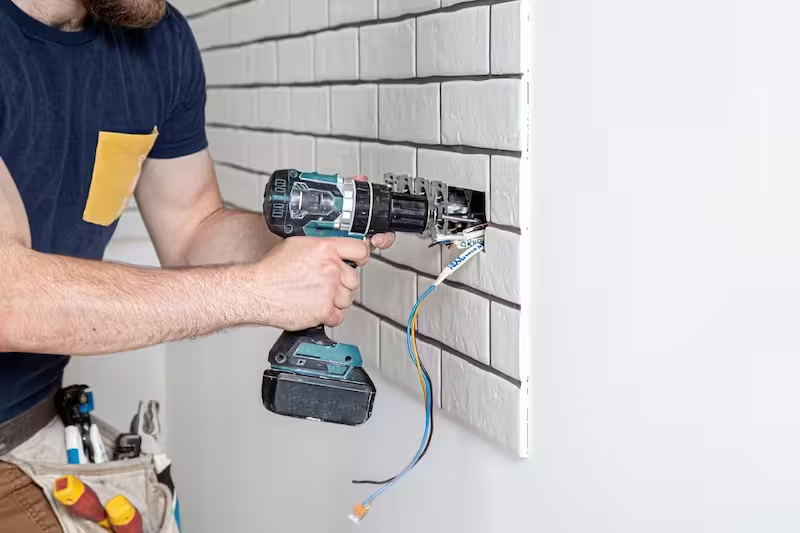
If your home was built before 1950, there's a good chance it still has knob and tube wiring hidden in the walls, attic, or basement. While this wiring was standard for its time, it was never designed for the electrical demands of modern living, and it comes with real safety and insurance risks that homeowners need to understand.
At All American Electrical Service, we regularly find knob and tube wiring in older homes across Rockland, Orange, Westchester, Sullivan, Ulster, and Putnam counties. Many homeowners don't even know they have it until an inspection, insurance issue, or electrical problem brings it to light.
Knob and tube (K&T) is an early method of electrical wiring used in homes built from the 1880s through the 1940s. It uses ceramic knobs to support wires along framing members and ceramic tubes to protect wires where they pass through joists and studs.
Key characteristics of knob and tube wiring:
When originally installed, knob and tube wiring was considered safe and was up to the building codes of its era. The problem is that those codes are now over 80 years out of date.
Modern electrical systems use a three-wire system with a dedicated ground wire that protects against electrical shock. Knob and tube has no ground, meaning there's no safe path for stray electrical current. This makes outlets unable to properly power modern electronics and creates a shock hazard.
After 70 to 100+ years, the rubber and cloth insulation on knob and tube wiring becomes brittle and crumbles away. Exposed copper wires in wall cavities and attics create a direct fire risk, especially when they contact insulation material, wood, or stored items.
Knob and tube circuits were designed for basic lighting and a few small appliances. Today's homes run air conditioning, kitchen appliances, computers, entertainment systems, EV chargers, and much more. Overloading these old circuits generates heat that the aging wiring can't safely dissipate.
One of the most dangerous situations we see is knob and tube wiring buried under blown-in attic insulation. K&T wiring was designed to dissipate heat into open air. When insulation is packed around it, the wires can overheat without any visible warning signs.
Over the decades, many homes have had amateur modifications made to knob and tube systems, including improper splices, added circuits, and connections to modern wiring using incorrect methods. These modifications often create serious fire hazards.
Older homes throughout our service area commonly have knob and tube wiring. We see it most frequently in:
Many of these homes have been updated cosmetically, with modern kitchens and bathrooms, but still have the original wiring behind the walls.
This is one of the biggest practical concerns for homeowners with knob and tube wiring. Many insurance companies in New York now:
If you're buying a home with knob and tube wiring, this can directly affect your ability to close the sale. Many mortgage lenders also flag knob and tube as a concern during the underwriting process.
You may be able to spot signs of knob and tube wiring without opening walls:
The only way to know for certain is a professional electrical inspection. We can assess your entire home and identify exactly where knob and tube wiring exists and what condition it's in.
Replacing knob and tube wiring is a significant but necessary investment. Here's what a typical rewiring project involves:
We work carefully to minimize disruption to your home. In many cases, rewiring can be done with limited drywall removal by running wires through accessible routes in the attic, basement, and wall cavities.
In some cases, a phased approach makes sense. If only certain areas of the home still have active knob and tube, we can prioritize those sections while ensuring the rest of the system is safe.
However, for insurance purposes, most providers want confirmation that all active knob and tube wiring has been removed or disconnected before issuing full coverage. A partial replacement may not satisfy their requirements.
Is knob and tube wiring illegal in New York?
It's not illegal to have existing knob and tube wiring, but new installations are not permitted. If you renovate areas with K&T wiring, code requires replacement with modern wiring.
How much does it cost to rewire a house with knob and tube?
Costs depend on the size of the home, accessibility of wiring, and how much needs to be replaced. We provide free estimates based on a thorough assessment of your specific situation.
Will my insurance drop me if I have knob and tube?
Some insurers will not cover homes with active knob and tube wiring. Others will cover you at a higher premium or require an inspection. Rewiring typically resolves the issue.
Can I add insulation if I have knob and tube wiring?
It's unsafe to add insulation around active knob and tube wiring. The wiring must be replaced first, or the insulation must be kept away from the wires.
How do I know if my knob and tube is still active?
A licensed electrician can test each circuit to determine whether K&T wiring is still carrying electrical current or has been disconnected.
Knob and tube wiring served its purpose for decades, but it's not safe for modern electrical use. Whether you're dealing with an insurance requirement, planning renovations, or simply want peace of mind, replacing outdated wiring is one of the best things you can do for your home's safety and value.
At All American Electrical Service, we specialize in rewiring older homes across Rockland, Orange, Westchester, Sullivan, Ulster, and Putnam counties. We handle everything from the initial assessment through permitting, installation, and final inspection.
📞 Call (845) 786 3143 or request a free estimate to find out if your home's wiring needs attention from a licensed New York electrician.
8 Phelps Street, West Haverstraw, NY 10993, USA
Mon–Sat: 7:00 AM – 3:30 PM
Sun: Closed
⭐ Rated 5.0 on Google Reviews


Book now and we'll put you at the front of the line — priority same-week scheduling across Rockland & the Hudson Valley.
Licensed. Insured. 20+ years. 5-star rated. No call-out fee for your estimate.
Call Us Now(845) 786-3143